The State of Design: How AI Is Reshaping the Design Industry
The rise of generative AI is the most significant disruption the design industry has experienced since the arrival of digital tools themselves. It is changing what designers do, how they work, and what the industry values. For some, this is a threat; for others, an unprecedented opportunity. The reality, as always, is more nuanced than either extreme. This article explores the major trends reshaping the design industry — the rise of AI, the evolution of the designer's role, and the challenges and opportunities that define this moment.
The New Tools of the Trade
The design toolbox has changed dramatically in a few short years. The most visible change is the arrival of generative AI tools that can produce images, layouts, copy, and even functional code from a text prompt. These tools have moved from novelty to necessity with remarkable speed, and they are reshaping the industry from the ground up.
Generative image tools can produce illustrations, mockups, and visual concepts in seconds — work that once took hours or days. Designers use them to explore directions rapidly, generate visual references, and produce variations that would be impractical to create by hand. The tools are not just for final output; they are powerful engines for ideation, allowing designers to visualize possibilities before committing to a direction.
Generative layout and UI tools are beginning to design interfaces — suggesting layouts, generating components, and assembling screens from descriptions. While these tools are not yet producing production-ready designs autonomously, they are increasingly capable of generating starting points that designers refine. They are changing the economics of the early design process, making exploration cheaper and faster.
Generative copy and content tools are producing the text that accompanies visual design — headlines, microcopy, body copy, even brand voice. For a profession historically centered on visuals, the arrival of AI copywriting tools has been quietly revolutionary, freeing designers from the awkward gap between what they could visualize and what they could write.
Design-to-code tools are converting designs into working code automatically. These tools are improving rapidly, and they are beginning to change the relationship between design and development. The design itself is increasingly becoming a deliverable that contains its own implementation — blurring the line between designing and building.
These tools share a common character: they are fast, cheap, and increasingly capable. They do not eliminate the designer — but they are eliminating the work that was once the designer's daily routine. The implications are profound.
The Changing Role of the Designer
As the tools change, so does the profession. The designer's role is not disappearing; it is transforming. The center of gravity is shifting from execution to direction.
From maker to director. In the past, a large portion of design work was execution — creating the assets, drawing the screens, producing the deliverables. AI tools now execute rapidly, which means the designer's value is shifting toward direction: deciding what to create, defining the direction, evaluating the output, and guiding the result. The designer is increasingly a director of AI tools rather than a maker of every pixel.
This is a significant shift in skills. Directing AI requires different abilities than executing design by hand. It requires the ability to articulate direction clearly, to evaluate output critically, to iterate through prompts and parameters, and to know when the result is right. These are the skills of judgment and taste — which are precisely the skills that machines cannot yet replicate.
From production to strategy. As production becomes cheaper and faster, the strategic value of design rises. If anyone can generate a logo or a layout quickly, the differentiator is no longer the ability to produce — it is the ability to think. Designers who can connect design to business goals, who understand users deeply, who can define problems rather than just solve them, become more valuable. The industry is shifting from valuing what designers can make to valuing what designers can think.
From solo craft to orchestration. The modern designer increasingly works with a team of AI tools as collaborators — delegating tasks, refining outputs, and assembling results. This requires orchestration skills: knowing which tool to use for which task, how to combine tools effectively, and how to manage the workflow. The designer is becoming an orchestrator of a hybrid team of humans and machines.
The Impact on Design Workflows
These changes are not abstract; they are reshaping the day-to-day workflows of design teams.
Rapid ideation. AI tools have compressed the ideation phase dramatically. Designers can generate dozens of visual directions in the time it once took to produce one. This changes the design process fundamentally: exploration becomes cheaper, more options are considered, and the bottleneck shifts from generating ideas to evaluating and selecting among them.
Faster iteration. The speed of AI tools accelerates the entire iteration loop. Concepts can be tested, revised, and re-tested more quickly. Prototypes can be generated and regenerated. The design process moves faster, and the increased speed changes the economics of experimentation — more ideas can be explored, and failing fast becomes more practical.
Democratized creation. AI tools lower the barrier to creating visual content. Non-designers can now generate designs that were once the exclusive domain of professionals. This democratization has two edges: it expands who can create, and it increases competition for designers who offer only production skills. The value of professional design lies increasingly in the thinking, not the making.
The new design review. When AI produces the first drafts, the design review process changes. The critique is no longer primarily about the designer's hand-crafted work; it is about the direction, the selection, and the refinement of AI-generated options. This shifts the skills required for critique — from evaluating craftsmanship to evaluating direction and quality.
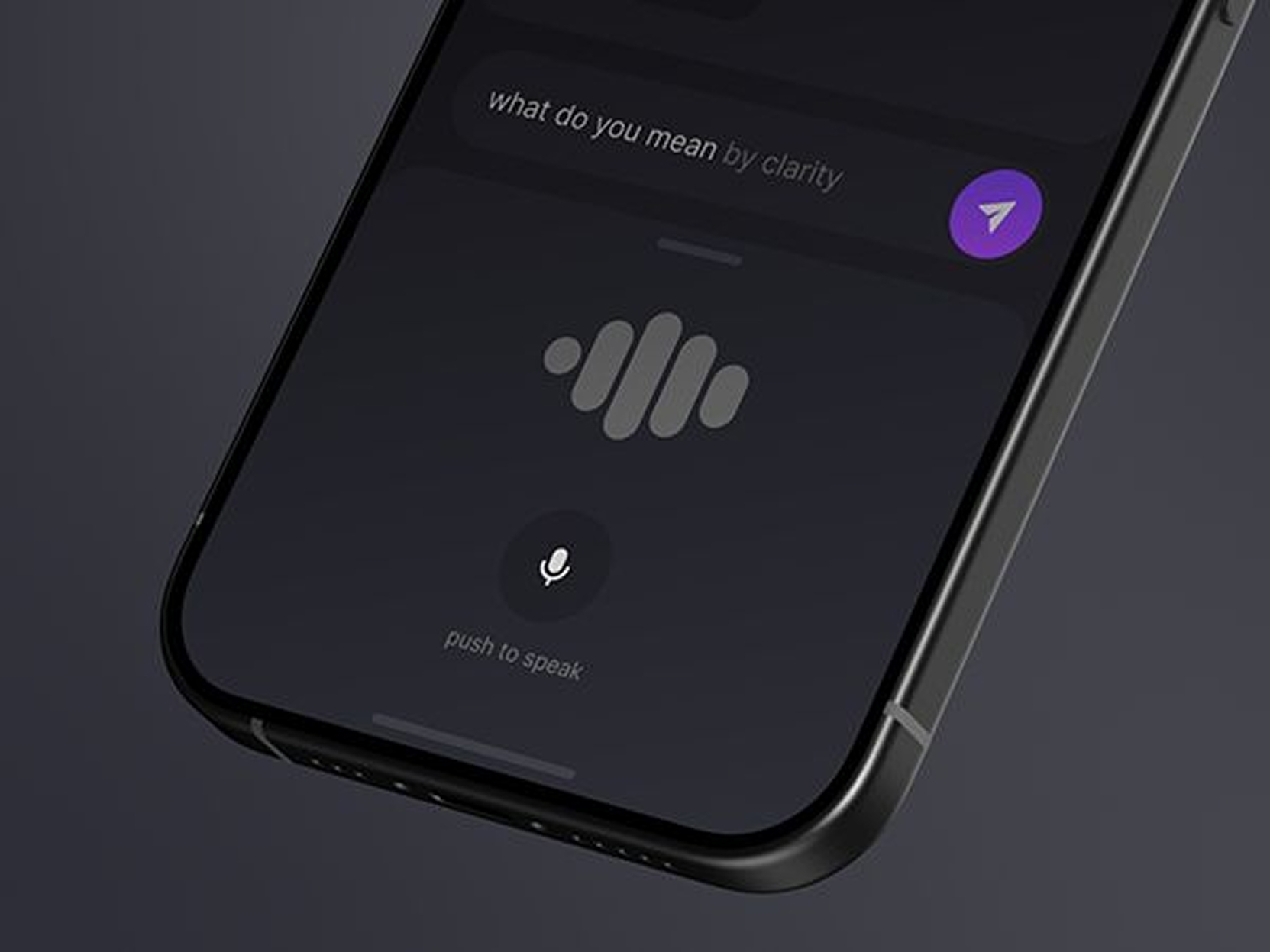
The rise of the prompt. The prompt — the text instruction that directs an AI tool — has become a new design artifact. Crafting effective prompts is a skill: specifying direction, style, constraints, and intent clearly enough to guide the tool to a useful result. Prompt engineering is becoming a recognized part of the designer's toolkit, and its quality directly affects the quality of the output.
The New Value of Human Designers
If AI can produce the visual output, what remains uniquely human? The answer defines the designer's future value.
Taste and judgment. AI can generate many options; it cannot reliably know which is best. Taste — the ability to judge quality, to recognize what is right, to discern the excellent from the merely adequate — remains profoundly human. The designer's taste is the filter that turns AI's prolific output into excellent design.
Strategic thinking. AI tools work within the brief they are given. They do not define the problem, understand the user, or connect design to business goals. Strategic thinking — understanding what to design, for whom, and why — remains the designer's domain. The designer who can define the problem shapes what the tools produce; the designer who cannot is shaped by them.
Empathy and context. AI has access to enormous data, but it does not share human experience. The designer's empathy — the ability to understand how a real person will feel and behave — remains irreplaceable. The context a designer brings — knowledge of the user, the brand, the culture, the moment — is what makes design resonate.
Ethics and responsibility. AI tools inherit and amplify the biases in their training data. The designer's responsibility to create ethical, inclusive, accessible design has not diminished; it has grown. The human designer is the conscience of the process, ensuring that design serves people rather than merely producing output.
The craft of the whole. AI can produce isolated assets — an image, a layout, a block of copy. But design is not a collection of assets; it is a coherent whole — a system of decisions that work together to create an experience. The integration, the coherence, the orchestration of parts into a whole remains the designer's craft.
The Trends Shaping the Industry
Beyond AI, several other trends are reshaping the design industry in this moment.
Design systems are maturing. The design system has evolved from a collection of components to a strategic asset that governs the entire product. Modern design systems encompass tokens, components, patterns, motion language, and accessibility standards — a comprehensive language for product design. They are increasingly treated as products themselves, with dedicated teams and roadmaps.
Accessibility is moving from optional to essential. Accessibility is no longer an afterthought or a compliance checkbox. It is becoming a core requirement of professional design, driven by regulation, market demand, and a growing recognition that accessible design is better design. Design teams are building accessibility into their process from the start, and accessibility is appearing in job descriptions, design reviews, and project requirements as a matter of course.
The designer-developer gap is closing. The boundary between design and development continues to blur. Designers are increasingly expected to understand code; developers are increasingly involved in design decisions; and design-to-code tools are automating the translation between the two. The integrated "design engineer" — a professional who spans both disciplines — is a growing role.
UX writing is a recognized discipline. The words in an interface are increasingly recognized as a design element as important as the visuals. UX writing — microcopy, error messages, onboarding, empty states — is becoming a dedicated discipline with its own practitioners and standards. The craft of the word has joined the craft of the visual.
Motion and interaction are standard. Interfaces are expected to move. Motion design, micro-interactions, and animated transitions are now standard elements of professional product design. The static mockup is no longer the deliverable; the interactive, animated experience is.
Cross-platform continuity. Users move between devices — phone, tablet, laptop, desktop, watch, TV. The expectation is a consistent, continuous experience across all of them. Design is increasingly cross-platform, with a single design language expressed across every surface the user touches.
The rise of the design engineer and design ops. Beyond individual roles, the design organization itself is evolving. Design operations (design ops) manages the systems, processes, and infrastructure that make design teams effective. It is a growing discipline that treats the design team's effectiveness as a design problem to be solved.
The Challenges
The transformation of the design industry brings real challenges that the profession must confront.
The displacement of routine work. The work that AI automates is real work that humans once did. Designers whose value was primarily in execution face disruption. The industry must absorb this displacement — through retraining, through the evolution of roles, and through the recognition that the profession's center of gravity is shifting.
The quality problem. AI tools can produce enormous volumes of mediocre output. The ease of generation does not guarantee the quality of result. The industry faces a growing challenge of quality control — separating the genuinely good from the merely generated, and maintaining standards as the cost of production collapses.
The originality problem. AI models are trained on existing work; their output inevitably reflects what has been done. The risk of homogenization — of a thousand apps looking alike because they all derive from the same training data — is real. The designer's challenge is to use AI as a tool while maintaining originality, distinctiveness, and a point of view.
The ethics of AI. AI tools raise serious ethical questions: the use of training data without consent, the amplification of bias, the ownership of AI-generated work, the transparency of AI involvement. The design industry is still developing the norms and standards that will govern these questions. Designers have a responsibility to engage with them.
The copyright question. The legal landscape around AI-generated content is unsettled. Questions of copyright, ownership, and attribution are being decided in courts and legislatures even as the tools proliferate. Designers must navigate this uncertainty, protecting their work and respecting the work of others.
The over-reliance risk. The ease of AI generation can become a trap — producing output without thinking, iterating without understanding, generating without meaning. The industry must guard against the erosion of the deep understanding that makes design genuinely good.
The Opportunities
The same transformation that brings challenges brings opportunities.
The leverage of the designer. AI gives designers extraordinary leverage. A single designer with AI tools can produce work that once required a team. This multiplies the impact of individual talent — and raises the ceiling on what a designer can accomplish.
The expansion of the profession. As production becomes cheaper, design thinking becomes more valuable and more applicable. Organizations that could not afford professional design before can now access it. The application of design thinking — to products, services, and organizations — is expanding, and the profession's influence is growing.
The time for what matters. When machines handle the routine execution, humans have time for what matters: understanding users, defining problems, developing strategy, and crafting the coherent whole. The designer's work shifts toward the higher-value work that machines cannot do. This is not a reduction of the profession; it is an elevation of it.
The craft of the new tools. Every new tool creates a new craft. The craft of prompt engineering, of curating AI output, of orchestrating hybrid human-AI workflows — these are new skills that designers are developing. The designers who master the new tools define how they are used, and they lead the profession into the new era.
Conclusion
The design industry is in the middle of its most significant transformation in decades. The tools are changing, the role of the designer is changing, and the value the profession provides is changing. The moment is disorienting — and it is also extraordinary.
The designers who thrive in this new era will not be the ones who resist the change or the ones who surrender to it. They will be the ones who understand what the change means: that the machine does the making, and the human does the thinking. That the tools are fast, but judgment is the craft. That production is cheap, but taste, strategy, empathy, and responsibility are the value. That the profession is not shrinking but evolving — from making things to deciding what should be made, and why.
The tools have changed, but the heart of design has not. Design is still the discipline of understanding people and shaping solutions that serve them. The new tools amplify the designer's reach, but they do not replace the designer's mind. The designer who embraces the tools, masters the craft, and holds fast to the human center of the work will find that this is not the end of the profession. It is the beginning of its most powerful era — one in which the thinking designer, armed with tools of unprecedented capability, can create work that was once unimaginable.